WeatherLive Pro - Radar Alerts
- 4.2
- Rating
- 100.00K
- Installs
- Free
- Price
 Analysis by App-foxy
I approached WeatherLive Pro - Radar Alerts as a practical weather app rather than assuming that a polished name automatically means dependable forecasting. In everyday use, that distinction matters. A weather tool sits close to personal routines: commuting, planning outdoor time, deciding whether to carry rain gear, or checking conditions before leaving home. My review therefore focuses not only on the idea of a daily weather companion, but also on what a careful user can reasonably expect from this particular Android app and how much control the experience appears to give the person using it.
The app is listed in the weather category and is developed by Trung Kien CN Company Limited. It is free, carries an Everyone content rating, and has passed the early stage of distribution with over ten thousand installs. Those details make it easy to try without a financial commitment, but they do not by themselves establish forecasting quality or privacy standards. I would treat the download as an opportunity to inspect the app’s behavior on my own device, especially around permissions, notifications, and any requests for personal information.
What I looked for before trusting the forecast
The current release is version 1.0.0.4, with Android 8.0 or later required. That broad compatibility is useful for people using older phones, provided the device still runs modern applications comfortably. The app was released on March 20, 2026, so I would keep its relatively recent arrival in mind when judging maturity. A newer application may feel fresh, but it also deserves a little more observation before becoming the only source I use for important plans.
You May Also Like

 Blood Strike: 2.5 Anniversary
Blood Strike’s Loadouts Turn Every Drop Into a Tactical Gamble
A close look at Blood Strike’s custom loadouts: how fast access to signature weapons reshapes its battle royale rhythm, rewards preparation, and narrows the gap between fights.

 Pandora - Music & Podcasts
Pandora’s Music Is Easy to Start, but Harder to Recover
Pandora’s strength is its low-effort path from a seed to a station. Its weak spot is how much confidence it asks you to place in connection, setup, and quiet recovery.

 8 Ball Pool
 Is Built on Rivalries, Rematches, and Routine
A close look at the rivalries, rematches, shared routines, and unanswered safety questions that turn a quick pool match into a persistent mobile community.

 Samsung Music
’s Quiet Strength Is Playing What You Already Own
Its reach comes less from spectacle than from dependable access to a personal library. That simplicity is both the app’s strongest retention engine and its ceiling.

 AccuWeather: Weather Radar
AccuWeather Review: A Quick, Clear Forecast for Everyday Decisions
For everyday plans, the best forecast is the one you can understand quickly. AccuWeather makes rain timing, radar, and local conditions easy to act on, with a few trade-offs.

 Hill Climb Racing
Why Hill Climb Racing Still Turns Crashes Into One More Run
A tiny car, a bumpy hill and one more upgrade: Hill Climb Racing keeps resurfacing because its simple chaos makes every near-miss feel personal.
More From Our News Desk



The public average rating is 0.0, which tells me that there is not yet a meaningful body of visible rating feedback to lean on. I would not read that as proof that the app is poor; it is better understood as a reason to remain cautious. Without a developed review history, I cannot use other users’ experiences to validate alert timing, forecast consistency, or how well the interface behaves across different phones.
That lack of established feedback changes how I would use it. For a quick morning glance, a second opinion is easy: I can compare the result with the built-in weather service on my phone or a familiar weather provider. For a long drive, a flight connection, a hiking trip, or a decision affected by severe conditions, I would not rely on a single young weather app. The sensible approach is to use it as one input, then confirm important information through a trusted local source.
One useful habit is to test the app during ordinary days before depending on it during unusual weather. I would check the same location at roughly the same time for several days, note whether the displayed conditions make sense, and see whether alerts are understandable rather than merely frequent. This is a more helpful test than judging the application after one attractive screen or one accurate forecast.
Permissions deserve a deliberate first look
Weather apps often work best when they know where the user is, but location access is also one of the clearest moments for making a careful choice. If WeatherLive Pro - Radar Alerts asks for location, I would consider whether automatic local forecasts are worth granting that access. Someone who regularly checks weather for one town can often choose a location manually if the app offers that option, while a traveler may value automatic updates more.
I would also pay attention to whether a permission request appears at a sensible moment. A request made while I am trying to view a basic screen feels different from one explained when I enable a location-dependent function. The important point is not to approve every prompt automatically. I would read the wording, choose the narrowest access that still supports my intended use, and revisit the choice later in Android settings if my needs change.
The same caution applies to notifications. Alert access can be useful when I genuinely want weather warnings, but constant notifications can turn a helpful tool into background noise. I would enable them only after deciding what kind of reminder I need. If the app offers separate controls for different alert types, I would start with the most important ones and leave optional notices off until I know they add value.
I would not assume that a radar-focused name means the app replaces official emergency communication. A visual weather screen can help me understand what may be approaching, yet urgent safety decisions should still be checked against local authorities and established warning channels. This is especially important when the app has limited public history and no substantial rating record to establish its reliability.
How I would use it in a normal day
My realistic routine would begin before leaving for work. I would open the app, check the current conditions for my destination, look at the expected pattern for the part of the day when I will be outside, and decide whether I need a coat or umbrella. If the app supports a radar view, I would use it as a visual supplement rather than treating every colored area as a precise promise about my exact street.
That distinction is one of the most useful practical lessons with weather tools. A broad moving band can suggest that rain is approaching, but it does not guarantee the exact minute it will reach a particular entrance, bus stop, or neighborhood. I would leave a buffer in my plans instead of timing a walk to the edge of a displayed pattern. The app can support a decision; it should not encourage false precision.
For a weekend outing, I would check the forecast at home, then check again shortly before leaving. This workflow reduces the risk of acting on stale information and helps me notice whether the forecast is changing. If the app presents alerts, I would use them as a prompt to review conditions rather than as an automatic instruction to cancel plans. That keeps the final decision with me and avoids letting a notification dictate more than it actually tells me.
Another useful scenario is checking weather for a place other than my current location. A person visiting family, planning a delivery, or coordinating an outdoor appointment may need a destination view rather than a local one. I would look for a clear way to switch locations and confirm that the displayed place is correct before trusting the result. Location mistakes are easy to overlook when an app updates automatically, so I would make the habit of reading the location label instead of relying only on the visual design.
Where the app may fit better than familiar alternatives
The main appeal here is simplicity and low commitment. Because it is free, I can install it for a direct trial rather than deciding whether a subscription or purchase is justified. A focused weather app may also feel less distracting than a general news application that places forecasts beside many unrelated sections. For someone who wants a dedicated place to check conditions and explore radar-style information, that focus could be enough.
On the other hand, the usual alternatives have a major advantage: familiarity and accumulated user feedback. A phone’s built-in weather panel is often quicker for a basic glance, while a long-established weather service may offer a more proven alert workflow, broader forecast context, or clearer explanations of uncertainty. I would choose WeatherLive Pro - Radar Alerts when I value trying a separate weather interface and am willing to verify important information elsewhere. I would choose a more established alternative when reliability history, detailed local warnings, or a mature account and privacy experience matters more than experimentation.
The app’s name emphasizes radar alerts, but I would judge it by how clearly those elements help me act. A radar image is useful when I can tell what area it covers, how recent the image is, and what direction the pattern is moving. If those details are hard to read, the feature becomes decorative rather than practical. My tip would be to spend a few minutes learning the visual scale on a calm day, not during the first storm when I am already under pressure.
I would also compare the app’s alerts with what I actually need. A commuter may want a short warning before leaving, while a gardener may care more about rain timing and temperature trends. If the controls are broad or difficult to adjust, I would keep notifications limited and use manual checks instead. That trade-off protects attention: a weather app that interrupts too often can make users ignore the one alert that matters.
Data-sensitive moments and personal control
Trust is not only about whether a forecast looks accurate. It is also about whether I understand what I am allowing the application to do. I would inspect every permission shown by Android, especially location and notifications, and I would avoid granting access unrelated to my purpose. If the app asks me to create an account, I would consider whether an account is genuinely needed for the functions I want or whether I can use the basic weather view without one.
I would be careful when entering optional information. A weather app generally needs a place to provide local conditions, but I would not volunteer personal details merely to make the setup feel complete. If there are visible settings for saved locations, alerts, or account access, I would review them one by one. The best experience is one where I can understand what is active, turn off what I do not need, and remove access without having to guess.
There is also a practical privacy habit that many people overlook: uninstalling an app is not the same as reviewing an account. If I had created an account or saved locations, I would look for an in-app sign-out, removal, or account-control option before deleting the application. I would not assume that a free download has no data implications, and I would not assume that a permission is permanent. Android’s permission manager gives me another place to review access after installation.
These checks are not reasons to avoid the app automatically. They are a way to keep the decision in my hands. A weather application should be useful without making me surrender more information than I am comfortable sharing. If I cannot understand why a request appears or cannot find a clear way to disable an optional behavior, I would scale back my use and rely on a simpler alternative.
Small tests that reveal whether it suits you
I would begin by checking the app on both Wi-Fi and mobile data, because a weather tool is most useful when I am away from home. I would observe whether the essential information remains easy to reach and whether the application makes me wait unnecessarily before showing a forecast. I would not invent a performance verdict from one phone, but I would use my own device to decide whether the startup experience fits my routine.
Next, I would test location switching. I would select a nearby place, then a destination farther away, and confirm that the interface makes the active location obvious. This catches a subtle but important problem: an app can appear accurate while actually showing the wrong city. If switching locations is awkward, I would be less likely to use it for travel planning and would prefer a service with clearer location management.
I would then examine notification behavior over several ordinary days. I would note whether alerts arrive at useful moments, whether their wording tells me what action to take, and whether disabling them is easy. The best alert is not necessarily the most detailed one; it is the one I can understand quickly without opening several screens. If notifications are vague or excessive, I would turn them off and keep the app as a manual checking tool.
Finally, I would compare its forecast with a second source during changing conditions. I would not expect every service to match perfectly, because weather models and update schedules can differ. What I want to see is whether the differences are understandable and whether the app gives me enough context to make a cautious decision. This comparison is especially worthwhile because the public rating is still at 0.0 and the app has not yet built a large visible track record.
Who should try it, and who should wait
I think the app is most suitable for Android users who want a free, dedicated weather option and are comfortable evaluating it personally. It may appeal to someone curious about radar-oriented viewing, someone who wants to compare a new interface with a built-in weather panel, or someone using an older compatible phone. The Everyone rating also makes it broadly approachable for households, although adults should still help younger users understand that a forecast is guidance rather than a guarantee.
I would be more hesitant to recommend it as the sole weather authority for people whose safety or work depends on precise warnings. That includes anyone planning around dangerous travel, outdoor labor, water activities, or rapidly changing conditions. In those cases, I would pair it with official emergency notices and a more established weather service. The app can remain useful as a secondary visual check, but I would not make its alerts the only layer of protection.
I would also suggest skipping it if the setup requests feel excessive, if the location controls are unclear, or if the interface does not let you manage notifications comfortably. Free access is not enough to justify friction around personal control. A simpler alternative that shows the needed information with fewer decisions may be the better fit, even if it lacks a radar-focused identity.
My cautious verdict after weighing usefulness and trust
WeatherLive Pro - Radar Alerts is easy to consider because it is free, compatible with Android 8.0 and later, and aimed at a familiar daily need. Its recent release and growing install base make it worth a personal trial, but the absence of a meaningful rating history means I would keep expectations measured. I see it as a potentially handy companion for routine checks, not as a replacement for official warnings or a proven forecasting service.
My recommendation is to install it with a deliberate setup: grant only the permissions that match your purpose, choose notifications carefully, verify the active location, and compare important forecasts with another trusted source. Those steps do not take much time, and they reveal whether the app gives you enough clarity and control to earn a place in your routine.
In the end, I would keep using it if the radar view is readable, the alerts are genuinely useful, and the app lets me make those choices without pressure. I would remove it or relegate it to occasional comparison if the forecast feels unclear or the controls create more work than the weather information saves. That is the fairest way to approach this young weather app: use it as a convenient extra layer, while keeping the final decision—and the important safety checks—with yourself.
FAQs for WeatherLive Pro - Radar Alerts
01What features does WeatherLive Pro - Radar Alerts offer?
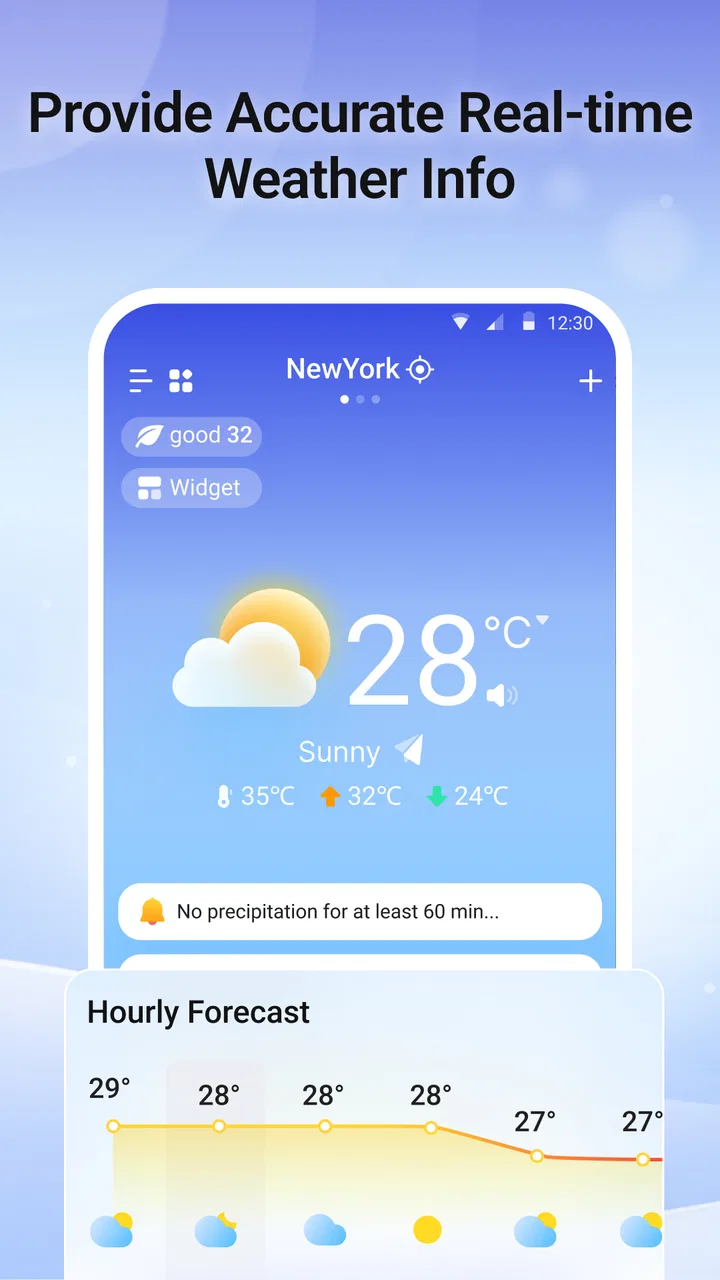
WeatherLive Pro provides real-time radar updates, customizable weather alerts, and detailed forecasts. Users can access temperature, humidity, wind speed, and precipitation levels. The app also includes a radar map with live storm tracking and severe weather alerts to keep you informed and safe during extreme conditions.
02Is WeatherLive Pro - Radar Alerts free to use?
WeatherLive Pro offers a free version with basic features, but for advanced functionality like ad-free usage, premium radar maps, and additional customization options, a subscription is required. Check the app store for the latest pricing and subscription details to see what fits your needs.
03How accurate is the weather forecasting in WeatherLive Pro?
WeatherLive Pro utilizes data from multiple meteorological sources to ensure high accuracy in its forecasts. The app provides hourly and daily updates, with advanced radar technology that helps track changes in weather conditions, offering precise predictions tailored to your location.
04Can I customize the types of alerts I receive on WeatherLive Pro?
Yes, WeatherLive Pro allows users to customize alerts based on specific weather conditions. You can set notifications for severe weather, rain, snow, or temperature changes. This ensures you only receive relevant information, helping you plan your day or respond to emergencies effectively.
05Does WeatherLive Pro - Radar Alerts support multiple locations?
Absolutely, WeatherLive Pro supports tracking weather conditions for multiple locations. This feature is ideal for users who travel frequently or want to monitor weather in different areas, such as a vacation spot or a relative’s city, ensuring comprehensive weather awareness wherever you are.
Pros
- Accurate real-time weather updates.
- Customizable alerts for severe weather.
- User-friendly interface with sleek design.
- Detailed radar maps with zoom feature.
- Ad-free experience for uninterrupted use.
Cons
- Premium features require subscription.
- Occasional lag on older devices.
- Limited offline functionality.
- Location services must be enabled.
- High battery usage during updates.

WeatherLive Pro - Radar Alerts
Gallery